16 Camel Coloring Pages
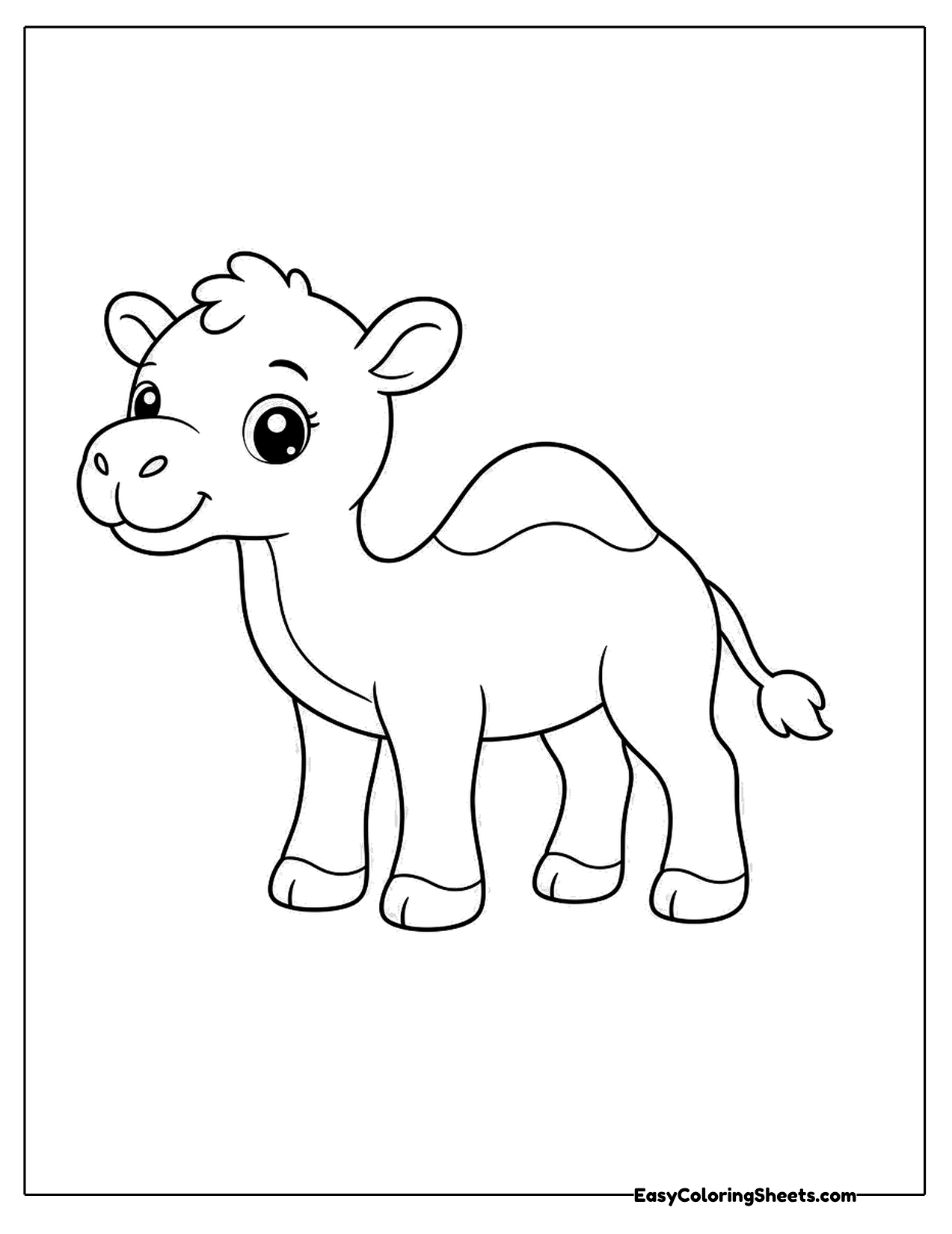
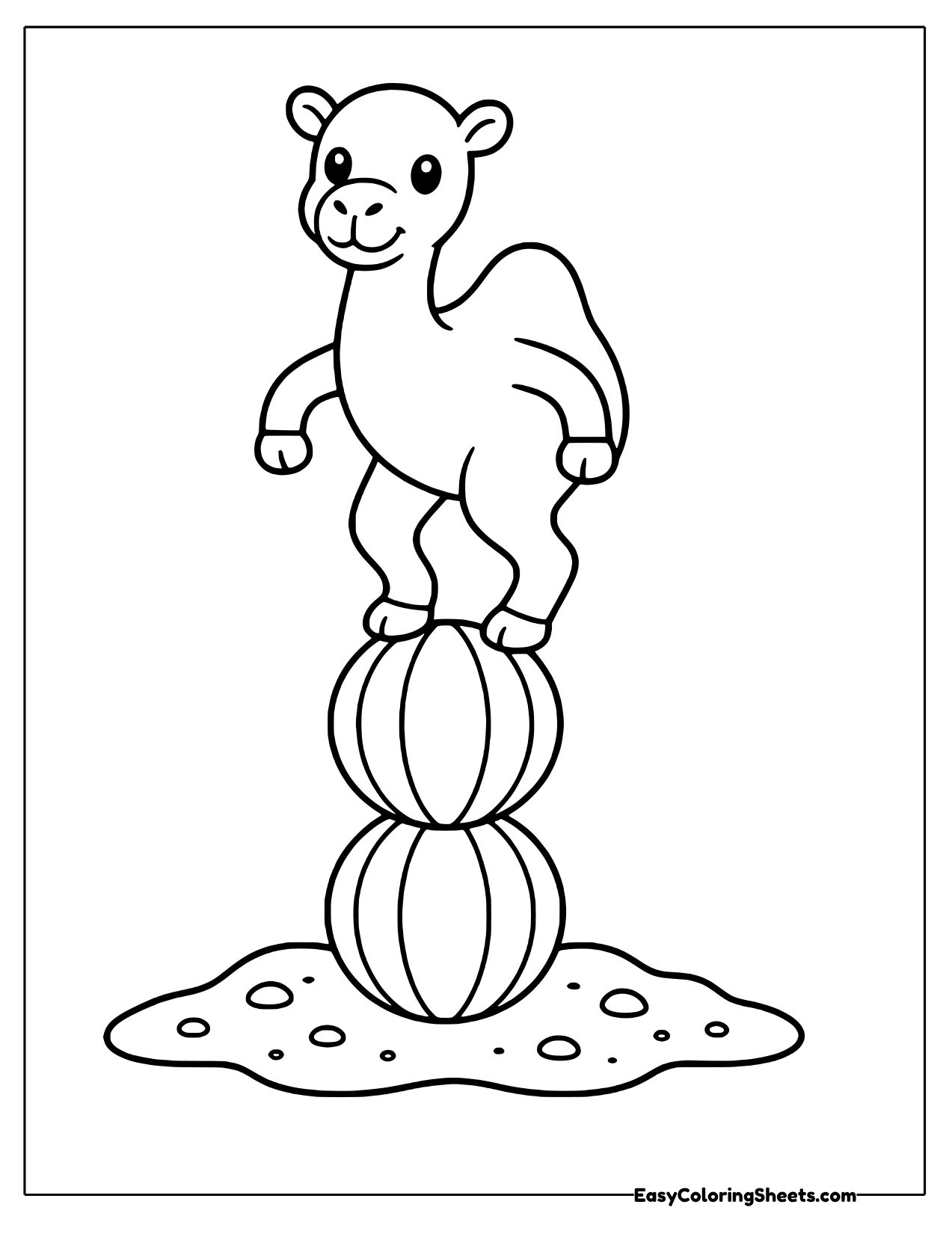
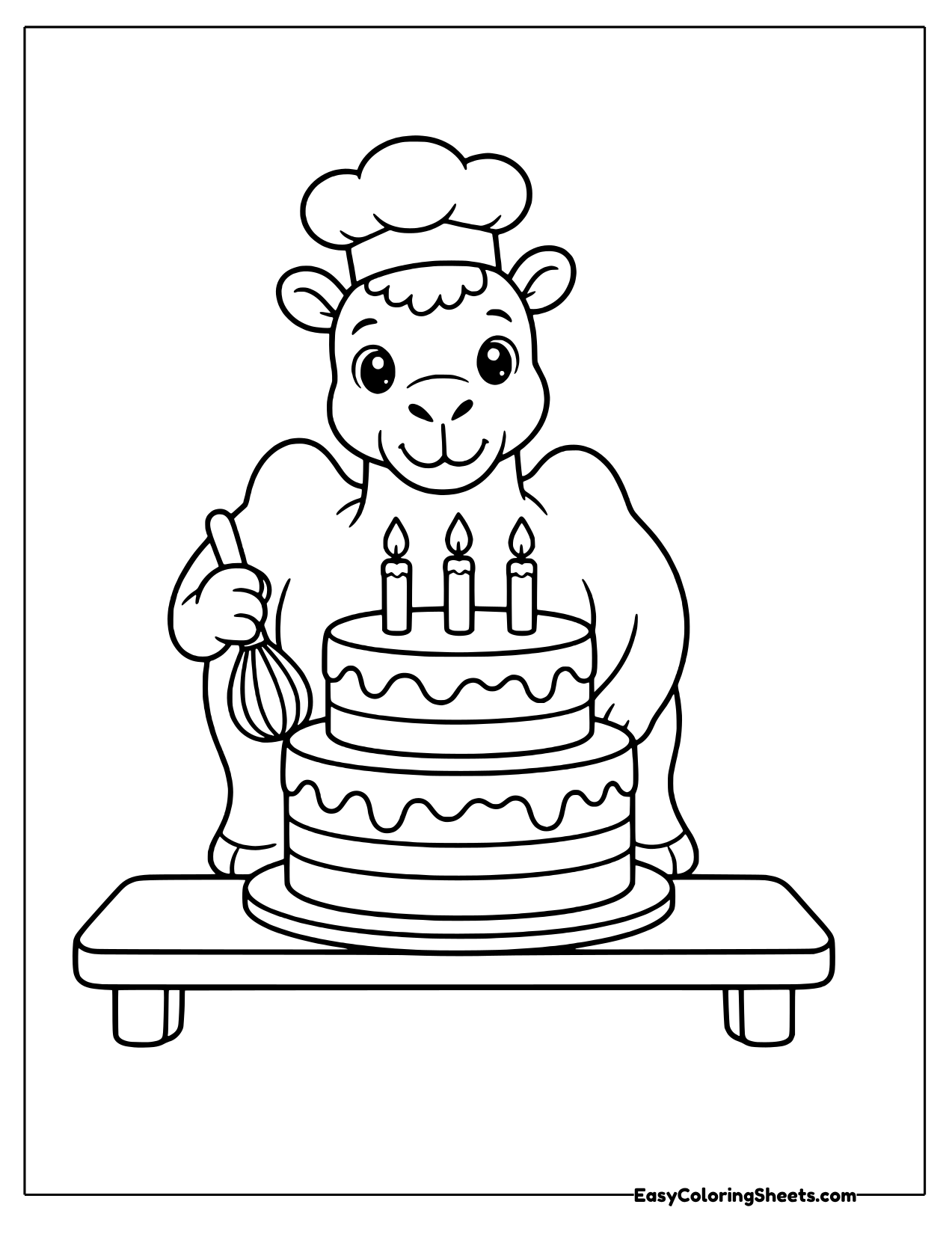
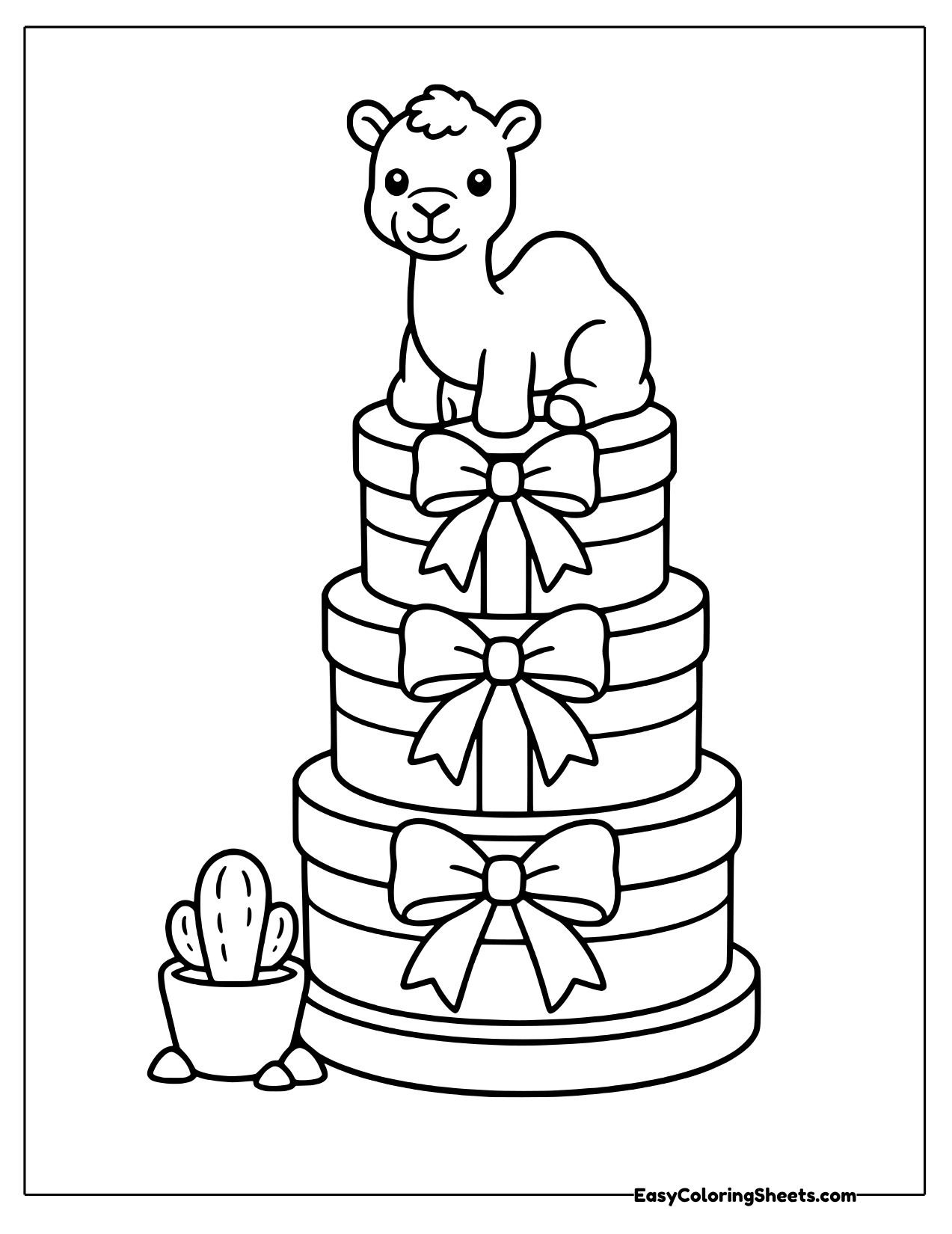
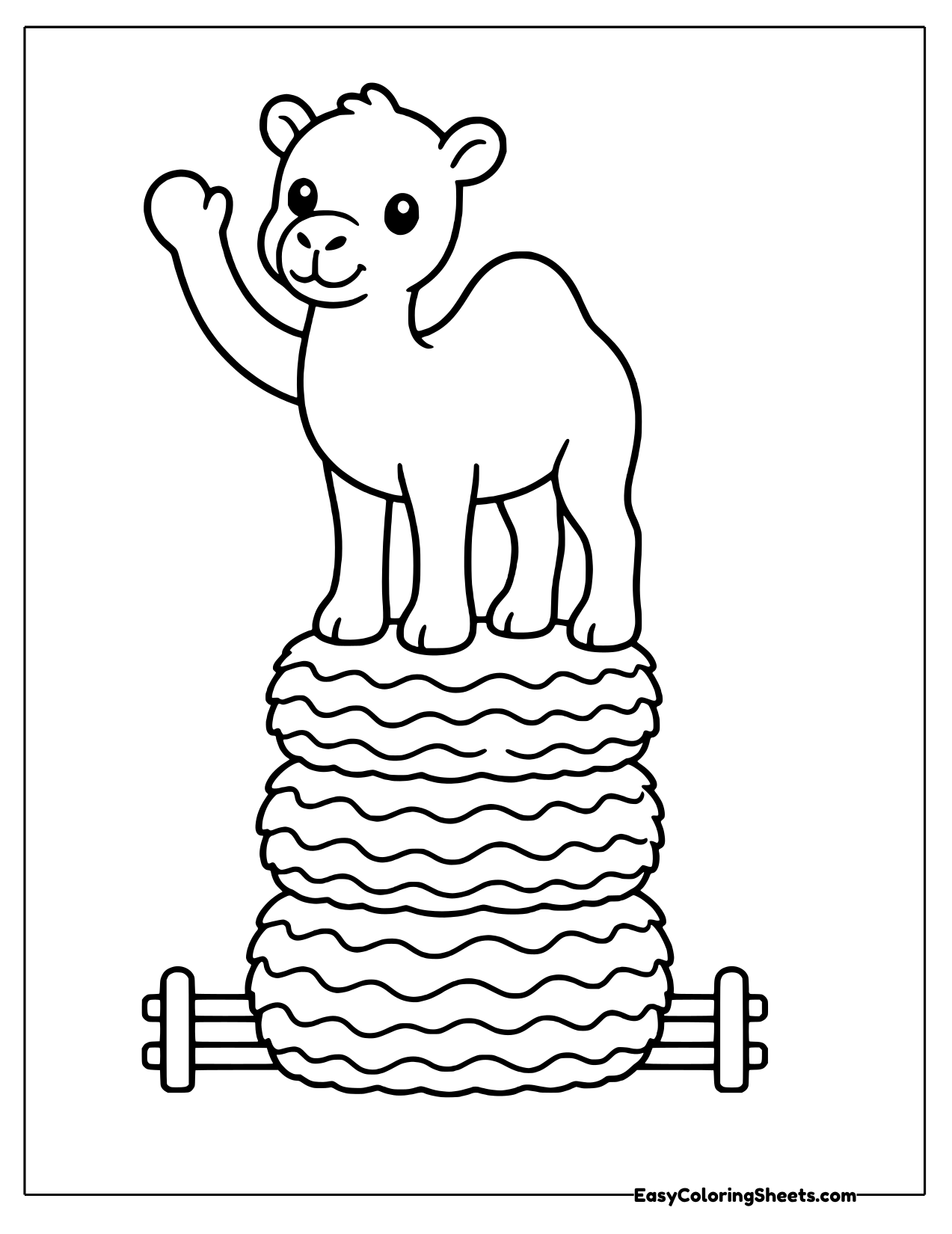
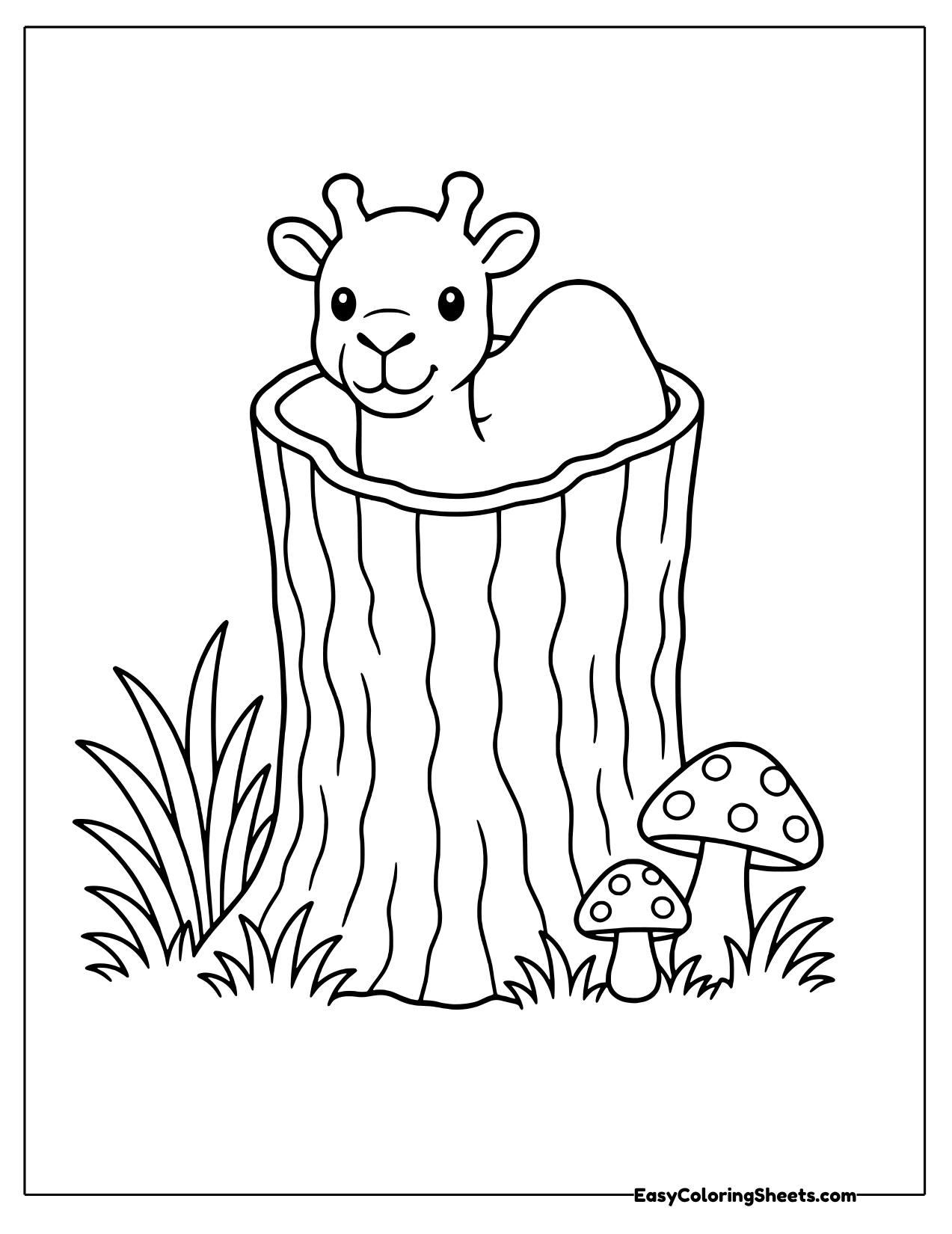
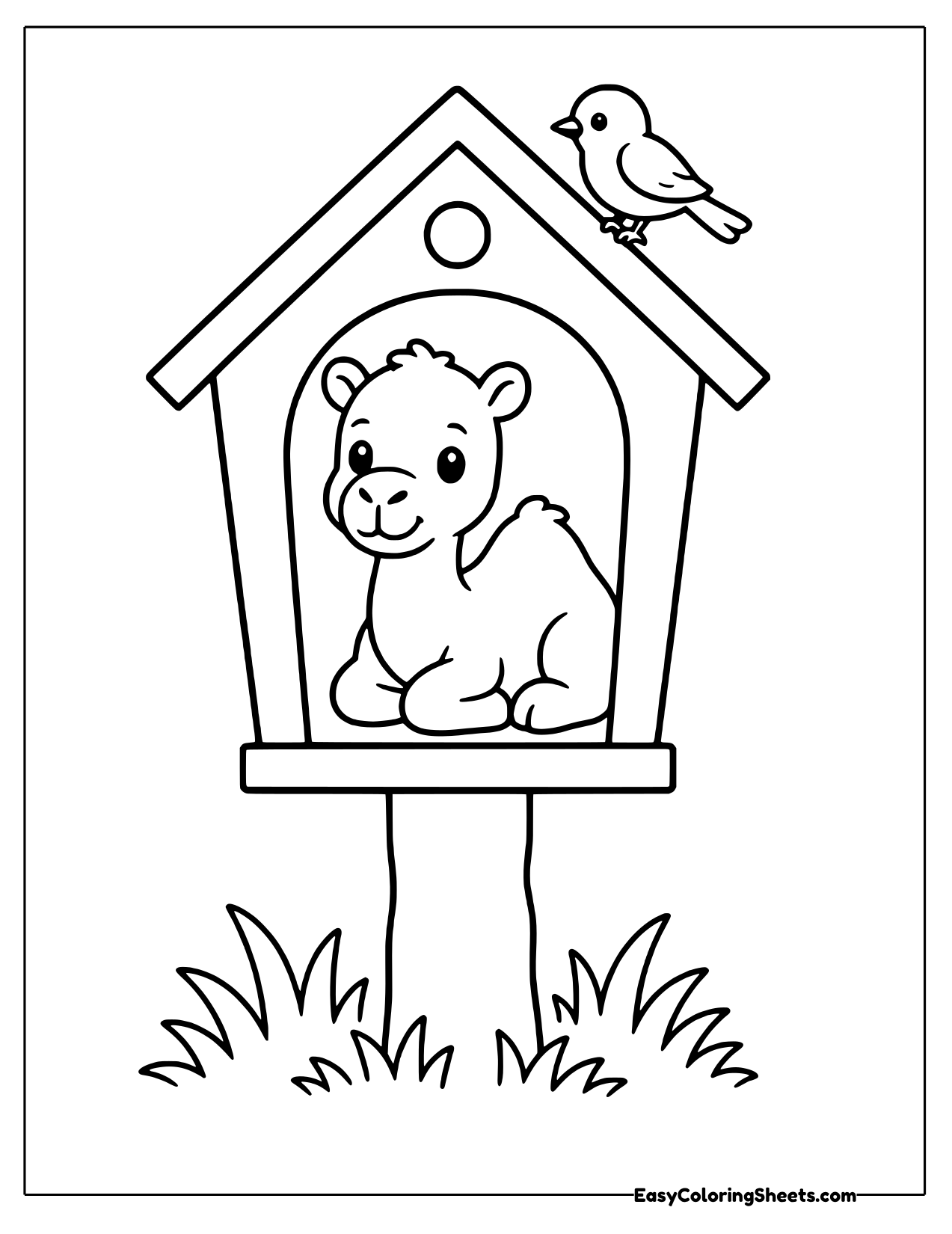
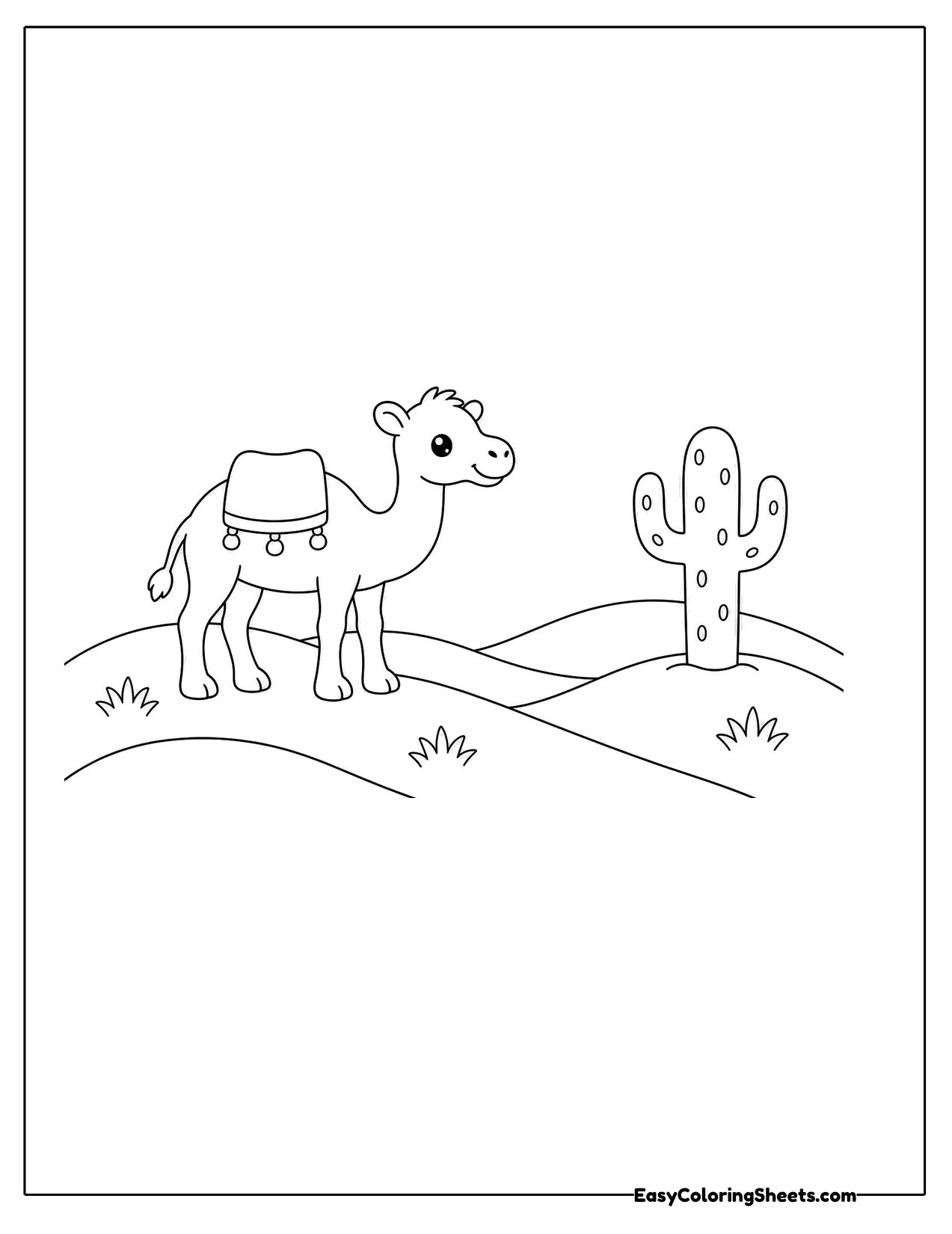
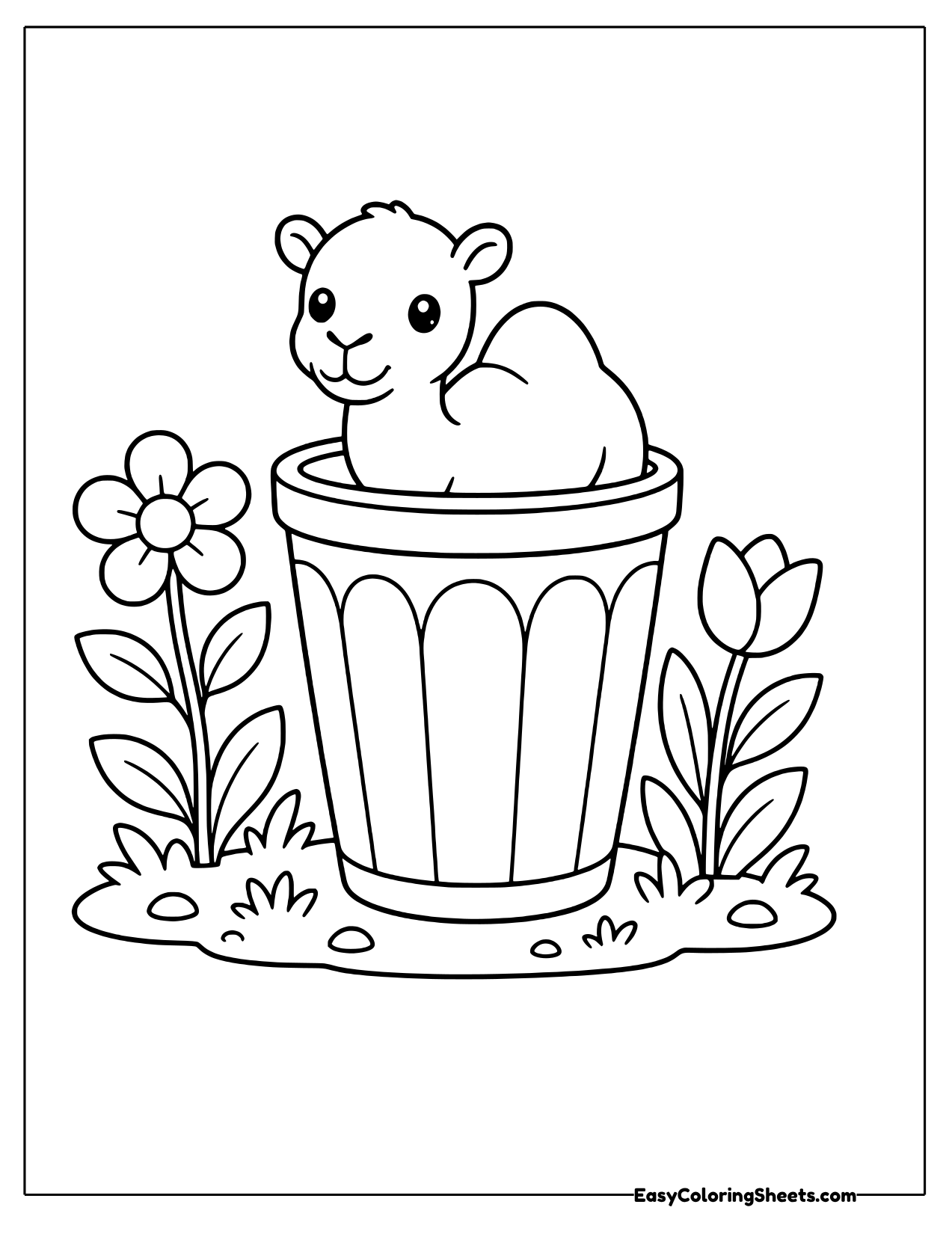
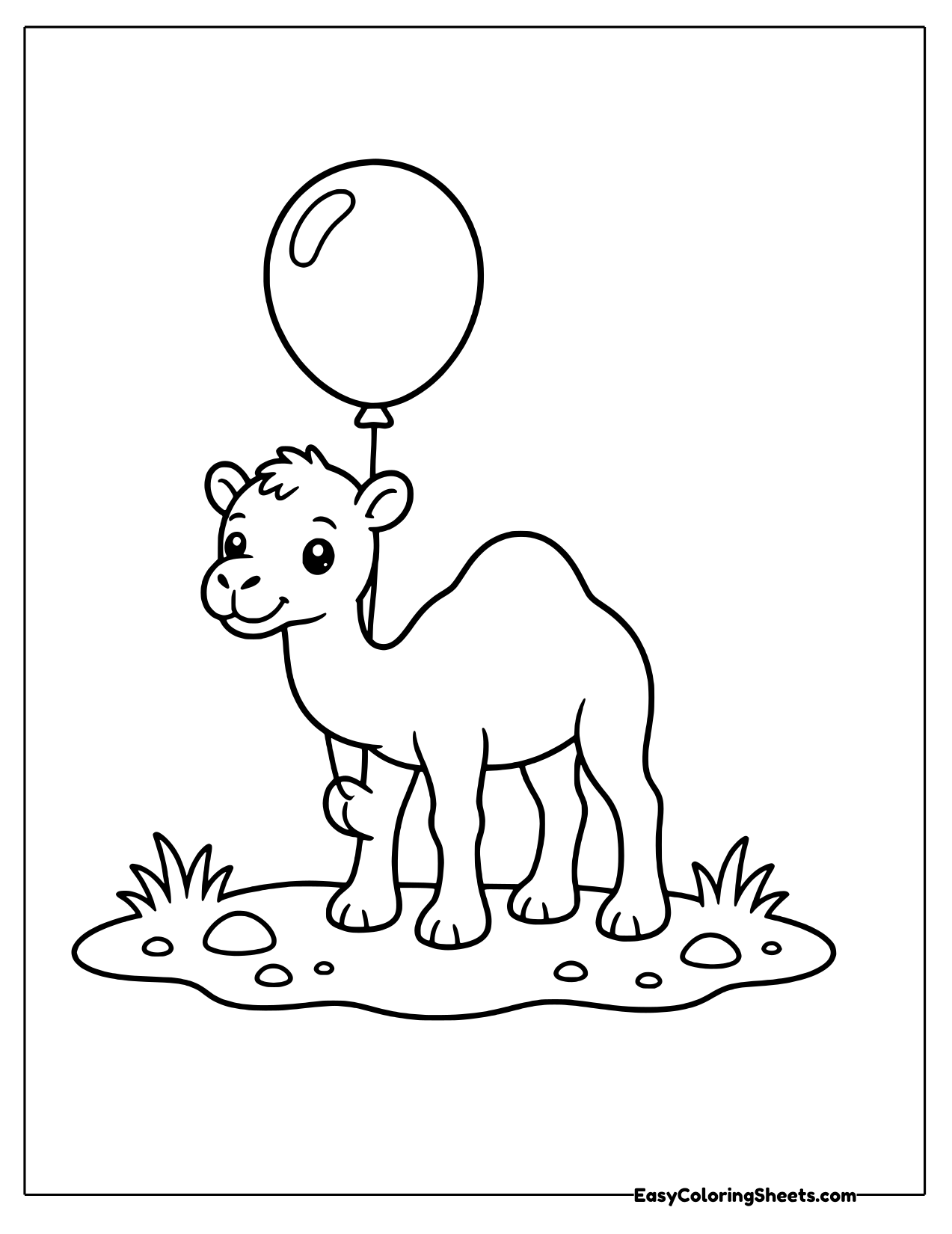
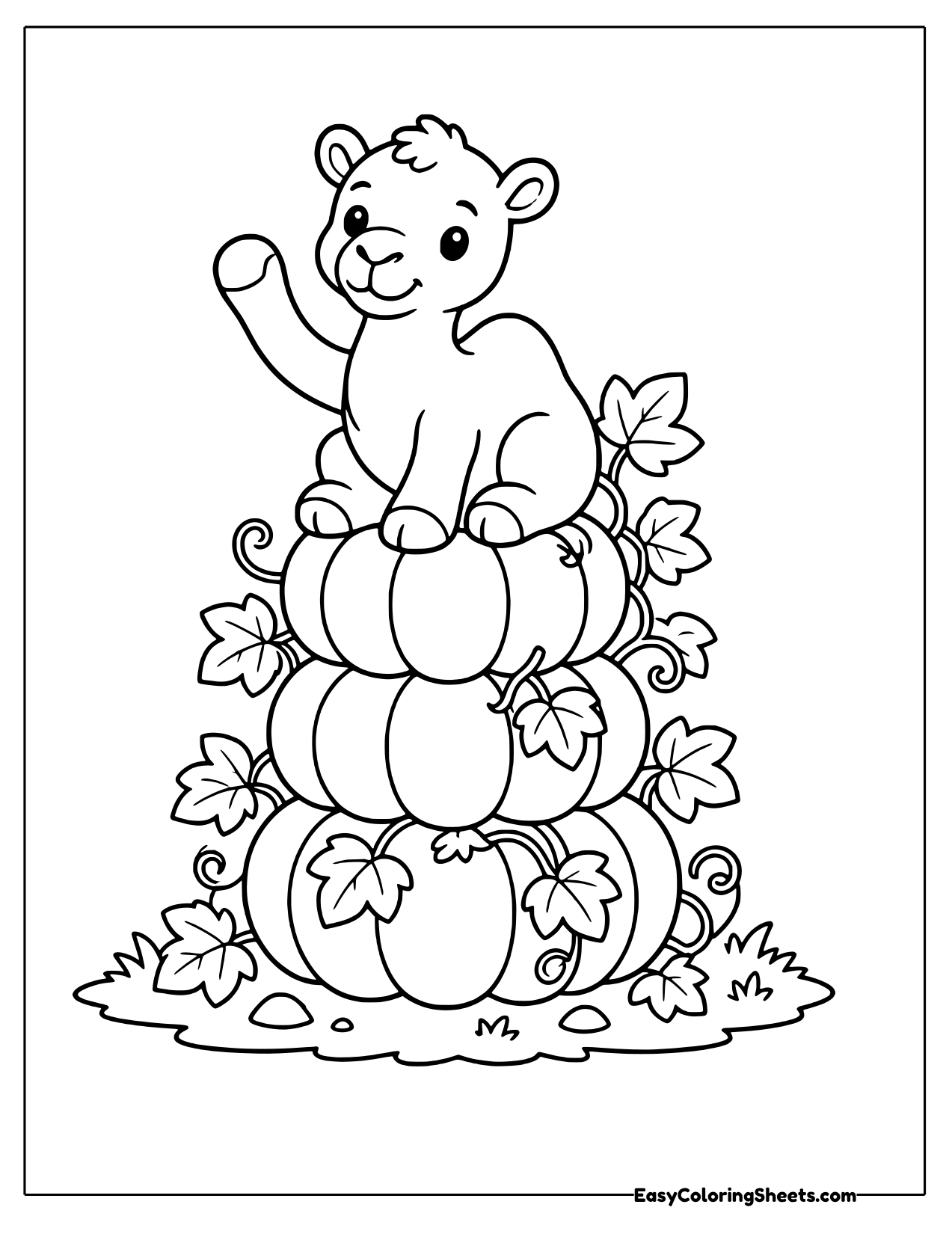
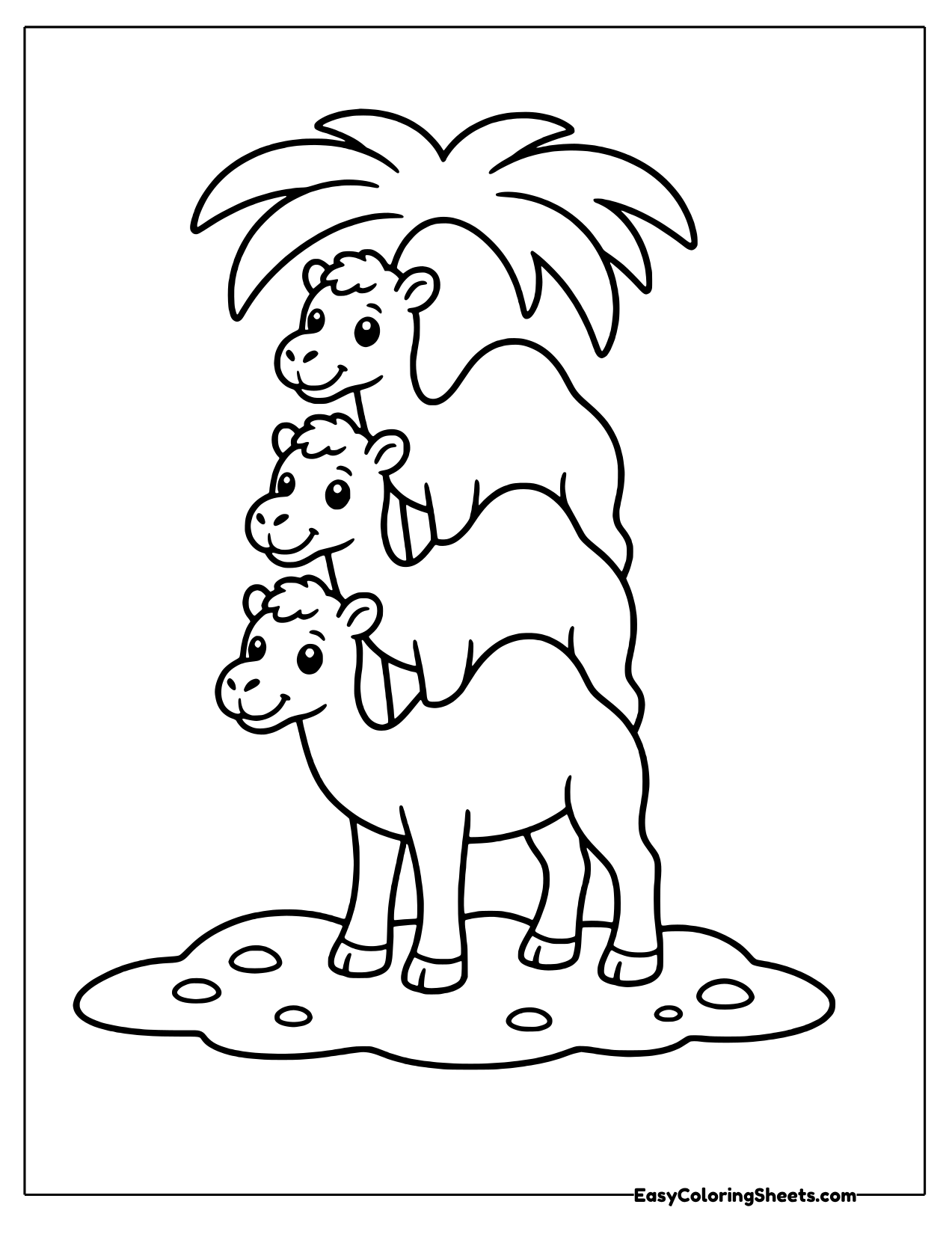
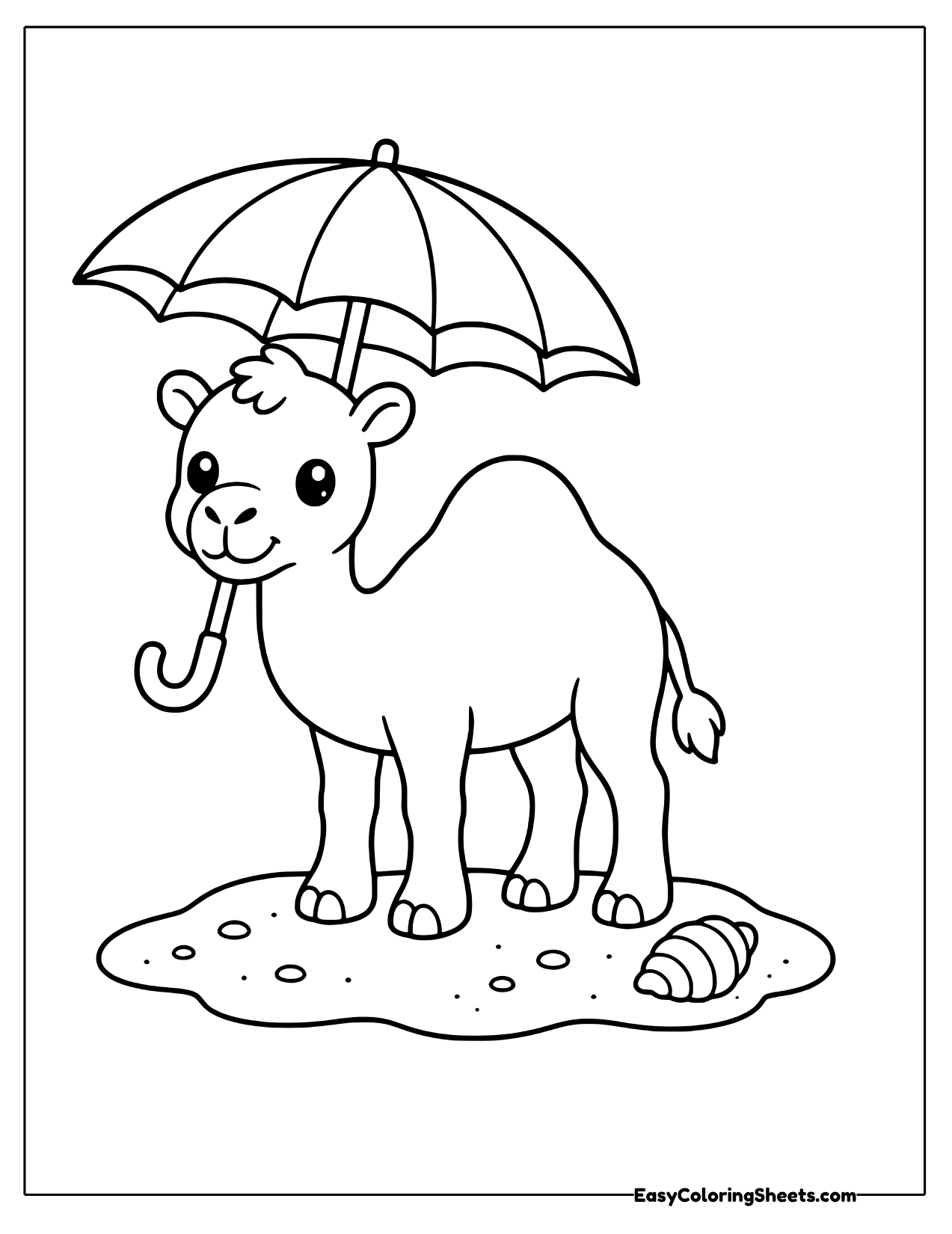
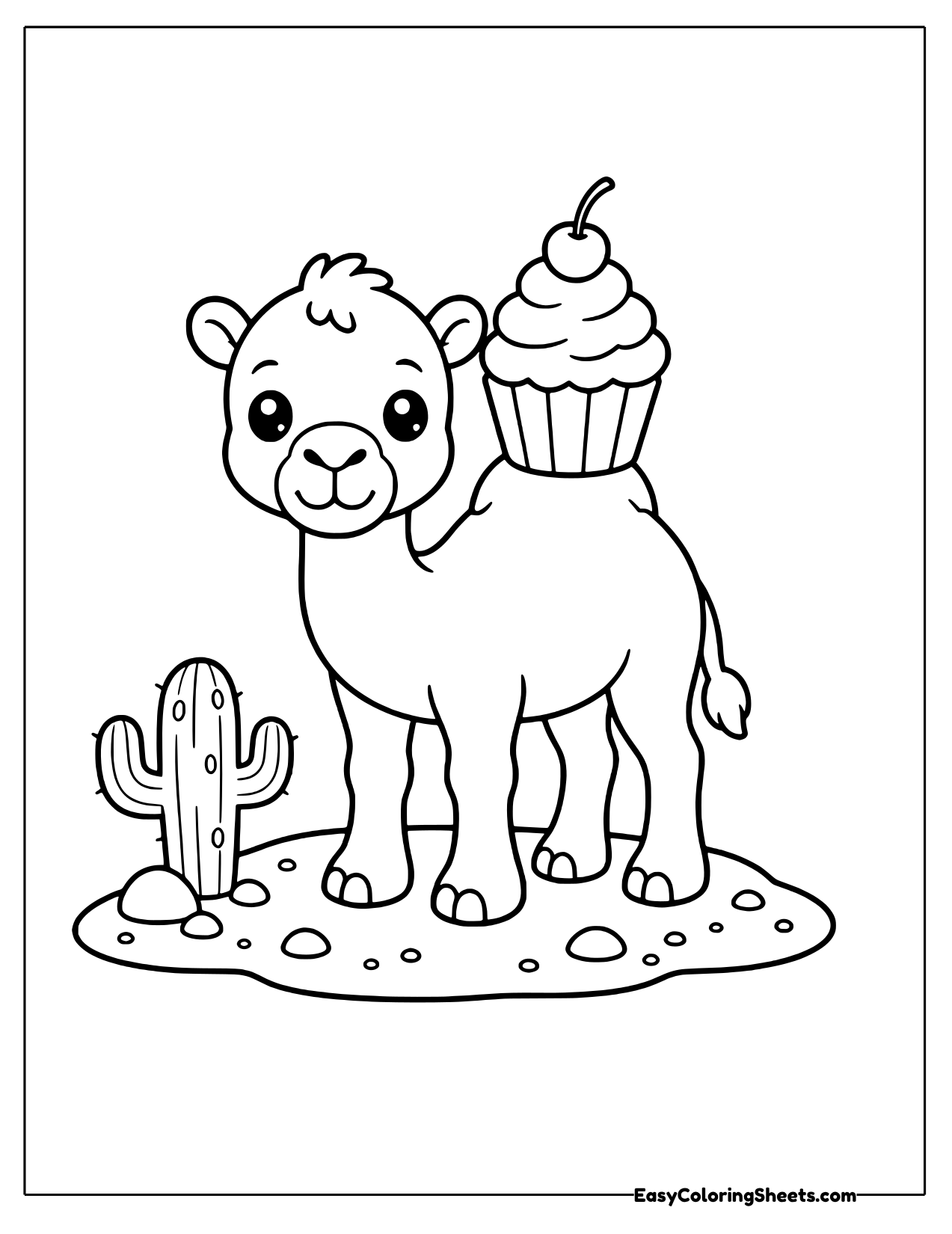
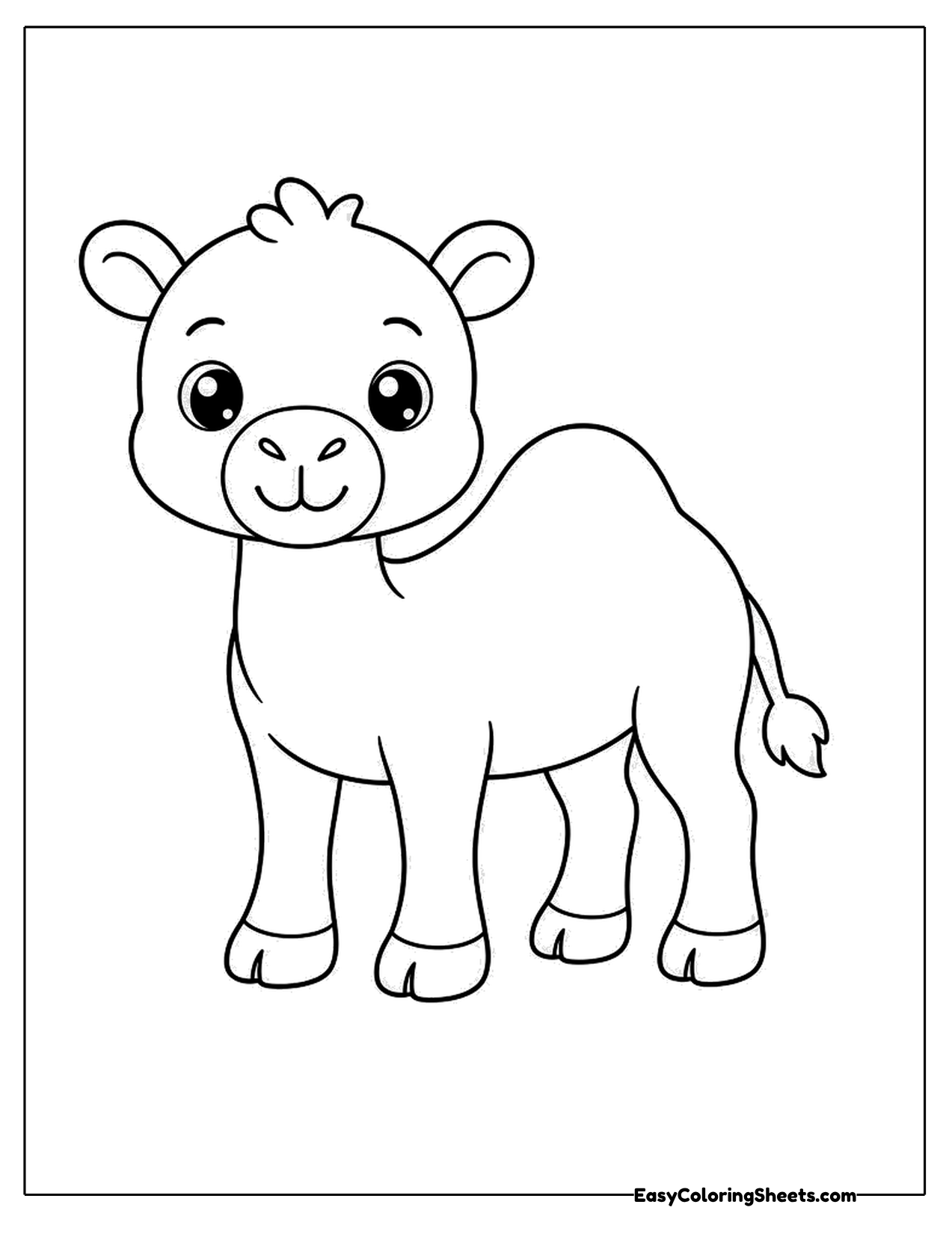
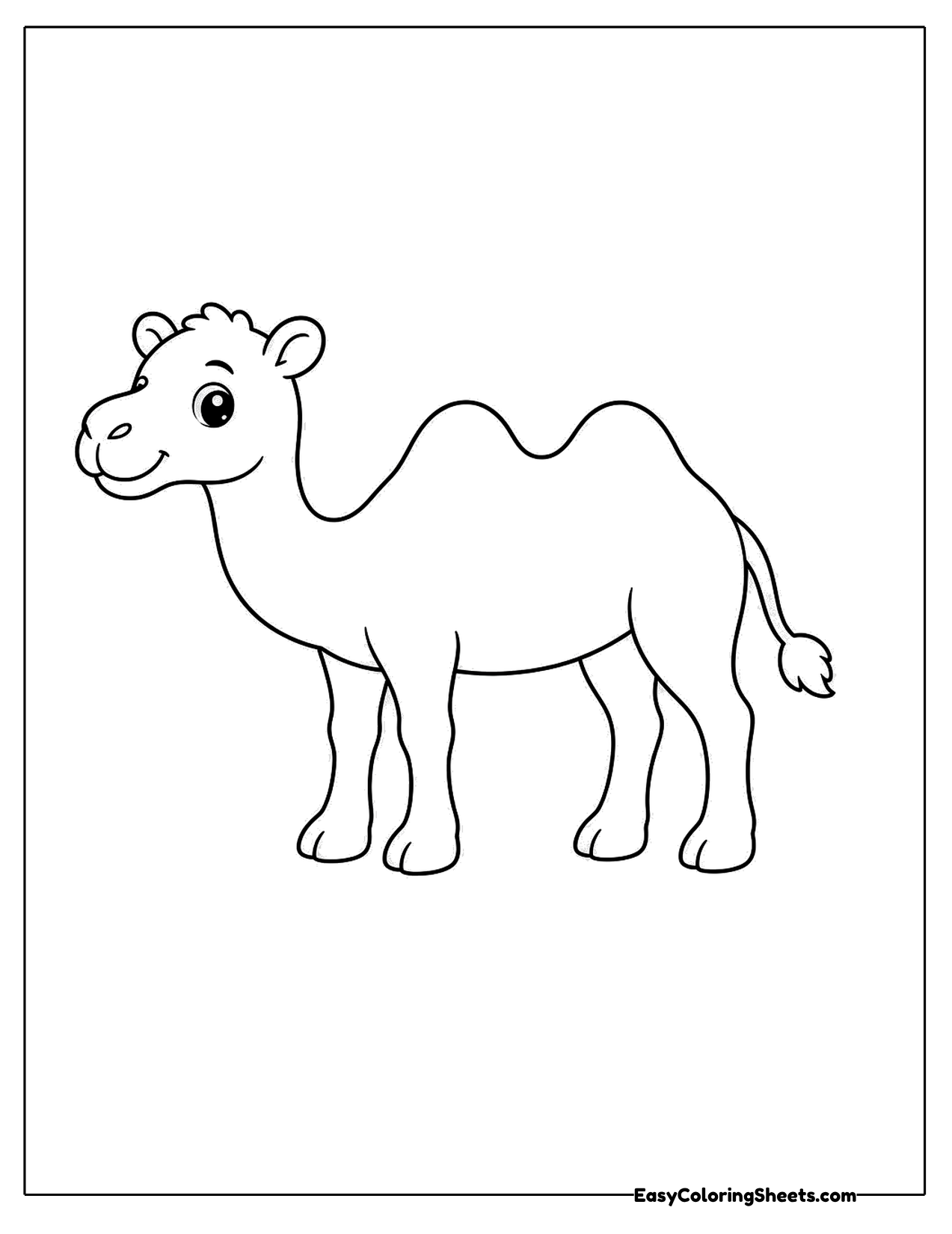
A camel's hump does not hold water. It stores fat, which camels can use for energy when food is scarce. They can still go a long time without drinking and then gulp more than 30 gallons in about 13 minutes. Dromedary camels have one hump and live mainly in North Africa and the Middle East, while Bactrian camels have two humps and come from the cold deserts of Central Asia. This set shows camels in the desert and in silly places. A camel crosses the desert, sits in a flower pot, peeks from a birdhouse and a hollow log, and holds a party balloon. Camels balance on stacks of balls, cakes, gifts, hay bales and pumpkins, and one page stacks three camels together. A baby camel completes the set. Camels are sandy tan to light brown, with long eyelashes and thick lips. Golden sand dunes, a pale blue sky and a bright sun make classic desert scenes.
Choosing a camel page
Cute Camel Character and Baby Camel are the easiest, with big smooth shapes for ages 3 to 6. Cute Camel stays simple too, but its two humps and long legs make it a good pick for comparing camel types. Camel in Desert is the most involved, with layered dunes, pom poms and cactus dots that suit kids around 5 to 8.
One hump or two
Show kids Cute Camel next to Baby Camel and count the humps. Explain that camels with one hump are called dromedaries and those with two are Bactrian camels, and that the humps store fat, not water. Kids can label each sheet, color the dromedary in sandy beige and the Bactrian in shaggy brown, then draw a desert or a rocky steppe behind each one.